
Faculty Profile
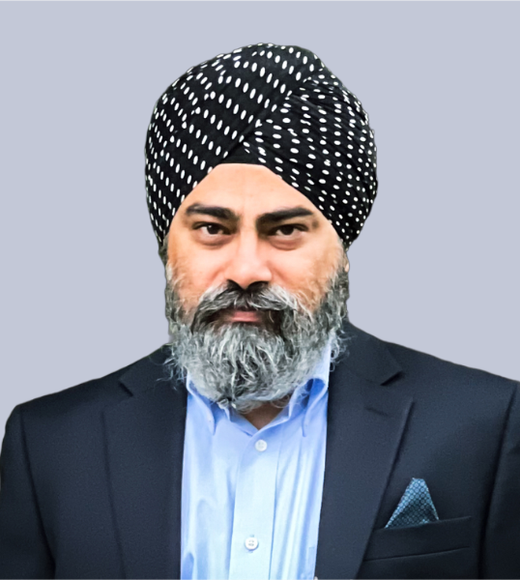
Harpreet Singh
Scholar of Sikh Textual Traditions; Co-Founder, Sikh Coalition; Founder, Harvard Sikh Center
Harvard UniversityUnited States
✓ Currently accepting mentees
Biography
Dr. Harpreet Singh is a scholar of Sikh textual traditions at Harvard University whose research reveals how religious communities in Mughal Panjab built political authority through cultural production. He is also a co-founder of the Sikh Coalition—now North America's largest Sikh civil rights organization—and the founder of the Harvard Sikh Center, bridging rigorous scholarship with institutional advocacy for the communities whose traditions he studies.
Singh's first book, The Ẓafarnāma of Guru Gobind Singh: A Critical Edition, Translation, and Commentary (Harvard Oriental Series, 2026), with a preface by Wheeler M. Thackston, establishes the first reliable text of the tenth Sikh Guru's famous Persian epistle to Emperor Aurangzeb. Drawing on five years of archival research across 38 manuscripts in both Perso-Arabic and Gurmukhi scripts, the critical edition recovers the Ẓafarnāma's original power—arguing that the letter is not a petition from a subject, as often portrayed, but a masterful act of sovereign judgment in which Guru Gobind Singh turns the empire's own literary conventions against itself. The project also pioneers a new method in material philology, using evidence from early Gurmukhi-script manuscripts to recover the pronunciation of Mughal-era Persian, challenging the dominance of modern Iranian norms in classical Persian studies.
His forthcoming book, Sovereign Vernaculars: Language, Script, and Power in Mughal Panjab, broadens this inquiry to a comparative study of how three religious communities constituted authority in the absence of state patronage. It contrasts the Sikh project of building a parallel constitutional order with the Hindu strategy of securing autonomy through imperial law and the Sufi model of building deterritorialized spiritual networks. Working across Persian, Panjabi, Sanskrit, Arabic, and Brajbhasha sources, Singh treats sacred texts as constitutional documents and vernacular literature as technologies of political imagination. His current research includes a critical edition of the Param Mārag Granth (c. 1700), a foundational text of Sikh political thought composed at Guru Gobind Singh's court in Anandpur, which he approaches as constitutional theory articulated during the formative period of the Khalsa.
Singh's published scholarship includes articles and chapters on authority, love, and the concept of Sikh sovereignty (in the Springer encyclopedia Sikhism, 2017), on Western writers and the Sikhs (in The Oxford Handbook of Sikh Studies, 2013), and a critical study advancing the textual understanding of the Zafarnama through manuscript analysis (Journal of Sikh and Punjab Studies, 2024).
He received his Ph.D. and A.M. from Harvard's Committee on the Study of Religion (2012), his M.T.S. in South Asian Religions from Harvard Divinity School (2005), and his B.S. in Computer and Systems Engineering from Rensselaer Polytechnic Institute (1997). At Harvard, he received the Certificate of Distinction in Teaching from the Derek Bok Center in multiple years. His courses include Sikh Traditions and Scriptures, Vernacular Literary Cultures of the Panjab, Introduction to South Asian Religions, and Religious Nationalism in South Asia.
In the immediate aftermath of the September 11, 2001 attacks, Singh helped establish the Sikh Coalition to protect the Sikh-American community from hate crimes and discrimination. He currently serves as Co-Chair of the Coalition's Board of Trustees. He is also Chair of the Board of Nishkam Media, which produces educational content showcasing Sikhs in public life, and a Trustee of the Parliament of the World's Religions. Additional service includes Harvard's Board of Religious, Spiritual, and Ethical Life, the Steering Committee of the American Academy of Religion's Sikh Studies Unit, and advisory roles at the Royal Ontario Museum (Sikh Gallery), the 9/11 Memorial & Museum, the Pluralism Project at Harvard, and the Institute for Asian American Studies. He established the Harvard Sikh Center in 2024 to serve Sikh students across New England with academic coursework, chaplaincy, and community programming.
His public-facing HarvardX course, Sikhism Through Its Scriptures, has reached over 54,000 learners from 180 countries. In recognition of his civil rights work, he received the Heritage Heroes Community Award from The Asian American Foundation (2023) and the James Park Morton Interfaith Tribute from the Interfaith Center of New York (2003).
Research Interests
Sikh sovereignty and political thought from the early modern period through 1947, with emphasis on how religious communities constituted authority through literary production. Critical editing and material philology of Sikh and Indo-Persian manuscripts, including the recovery of Mughal-era Persian pronunciation from Gurmukhi-script sources. The constitutional dimensions of foundational Sikh texts, particularly the Ẓafarnāma and the Param Mārag Granth ("Book of the Supreme Path," 1701). Comparative vernacularization in Mughal Panjab across Sikh, Hindu, and Sufi traditions. Computational approaches to manuscript analysis, including AI-driven scribal identification and the chronological stratification of undated texts.